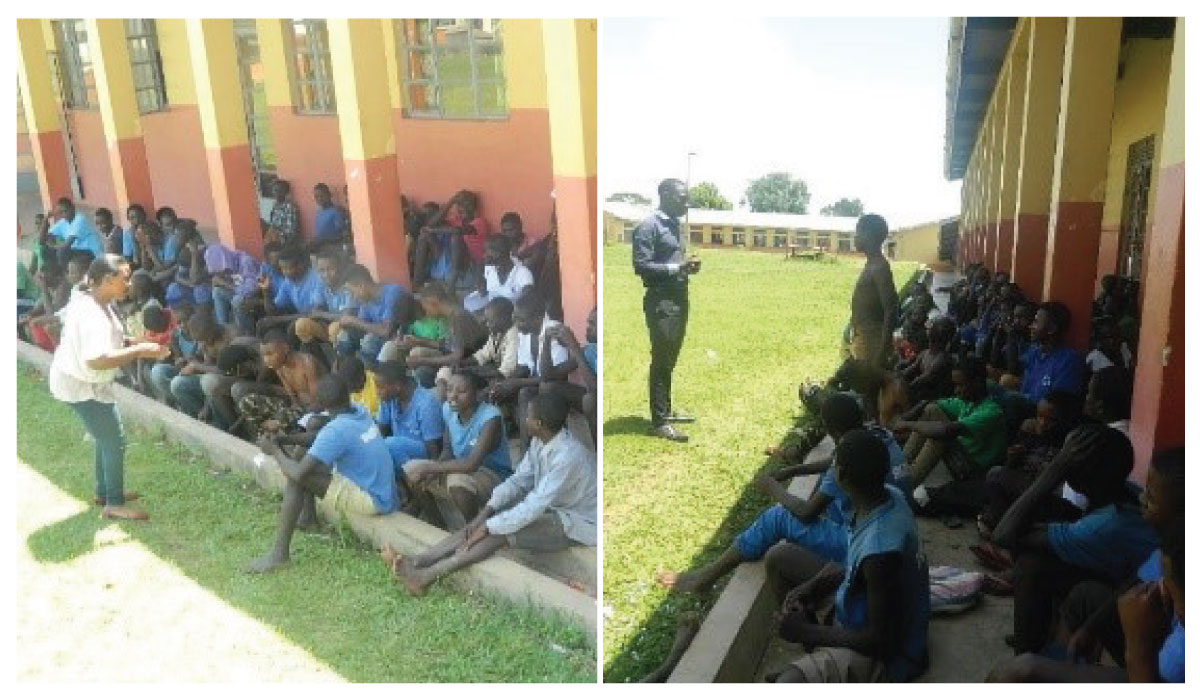
The social work department combines efforts with other professionals to provide counselling to children of different categories who come for services at the Centre. Major groups include
juveniles and children in street situations. Most children manifest unhealthy coping mechanisms and behaviors. UCC being a child protection focused organization which has worked with vulnerable children for a long time, is able to provide conducive and relaxed environment for children to open up. This enables the therapeutic relationship between the counsellors and the
children to thrive quickly. Two categories of counselling are held both at individual and group levels.
During sessions most children prefer face to face interaction against other therapeutic types. There are some children who are extremely maladjusted who may become volatile and hard to
control. Some of the youngsters fail to honour the freedom of expression provided by the Centre adequately and instead try to override the counsellors because they feel empowered by the fact
that they are prioritized in every activity. Such scenarios become challenges to the counsellors accustomed to controlling situations. This happens mostly in the initial stages of counselling
before children are subjected to intensive therapeutic sessions.
Counsellors are indeed aware that most children need a connection to family or other positive role models to help them mature. Children in street situations who left their homes many years
ago experience social, emotional and /or relationship difficulties that need urgent counselling. Such conditions do not only affect the child alone, it also distorts day to day interaction with peers.
UCC experienced counsellors are aware of the needs and concerns of children and youngsters that are much different than those of adults. UCC ensures the support offered include measures
to deal with these differences. Some of the ways to empower such children include appointing them in leadership positions, trusting them with errands among others.
Parents and guardians are able to report visible changes noticed with their children which include improvement in emotions which typically affect their day-to-day interaction with peers.
Counselling enables children to realize the following; coping with difficult emotions and situations, reconciling relationships with parents and other relatives, academic and vocational functioning,
and social functioning among others. Follow ups are emphasized for youngsters to minimize relapse tendencies especially individuals formerly engaged in drug and substance abuse.
Counsellors also appeal to parents and guardians to report any negative changes manifested by children after resettlement. Social workers keep in touch with families to guide in reducing
situations that trigger trauma and other life-threatening events in the lives of the children. Feedbacks show improvement in behaviors and adjustment among resettled children which
made stable in their new engagements. We thank the team of counsellors and social workers who continue to provide professional support.