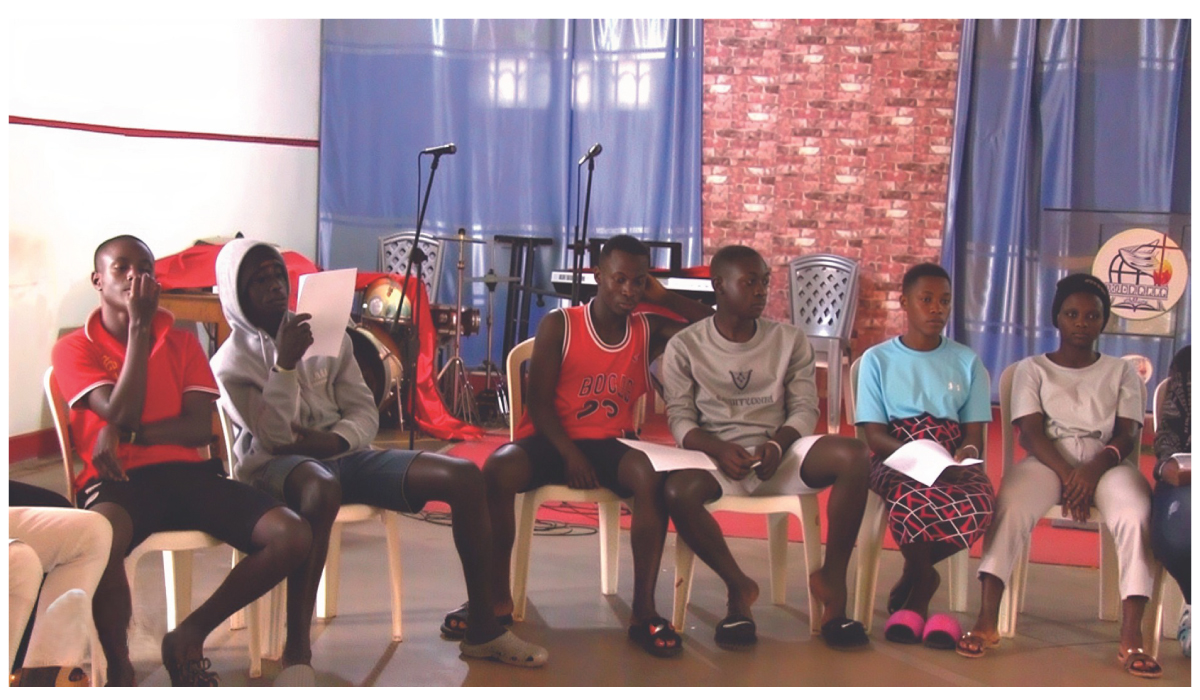
Uganda Children’s Centre in partnership with Makindye Institute for Social Development (MAKSOD) joined the rest of the world to commemorate the Day of the African Child which falls on 16th June of every year.
This event was held in remembrance of the students killed in 1976 during the Soweto uprising in South Africa. This year’s theme was about “Eliminating Harmful Practices Affecting Children: Progress on Policy and Practice since 2013”. UCC and MAKSOD staff used this memorable day to hold talks with students to hear their voices regarding harmful practices affecting children in their communities in regard to child protection policies. Participants included both males and females which provided gender balanced responses.
The discussions produced much information in regard to prevailing challenges because of the full participation of each member present. Key harmful practices affecting children cited by students included child marriages, female genital mutilation, forced marriage, violet initiation into witchcraft, pornography, corporal punishment, incest and body modification that are performed for beauty or marriageability of girls.
However, the government has several policies and laws enacted by legislators to protect the rights of the children but are not enforced as required. The weak law enforcement is a major factor in failing to eliminate harmful practices in Africa.
COVID-19 has had and continues to have a negative effect on children’s well-being, learning, development and protection. COVID-19 has exacerbated the situation of harmful practices by increasing the vulnerability of children to be exposed to further risk to experience harmful practices with no recourse to essential prevention, protection and support services. In school environment, students cited cases of bullying, tribal discrimination, corporal punishment and sexual abuse which have not been addressed by school administration.
There has been little progress in terms of comprehensively outlawing corporal punishment in all settings, and it remains a common practice. The use of violent discipline at home is very common, where more than nine out of ten children experienced a form of corporal punishment at home.
Students were grateful for the session which empowered them with information of knowing some of the harmful practices affecting children, available policies and laws, and understanding Child Rights as a human right and avenues for defending them.